The Palace of Knossos is the most important archaeological site in Crete and one of the most significant in all of Greece — the ceremonial and political heart of the Minoans, Europe's first advanced civilization, and the setting for the legend of the labyrinth and the Minotaur. For first-timers, a little context turns a confusing set of reconstructed ruins into a genuinely thrilling window into the Bronze Age. This guide covers how to visit Knossos: what it is, what to see, how to do it well, and what to pair it with.
This article contains affiliate links. If you book through them we earn a small commission at no extra cost to you.
What Knossos is
Knossos was the largest Bronze Age palace complex on Crete, the center of the Minoan civilization that flourished some 4,000 years ago — long before classical Athens. At its height it was a sprawling, multi-story complex of royal quarters, workshops, storerooms, and ceremonial spaces, home to perhaps thousands of people, making it effectively Europe's oldest city. Its complex, maze-like layout is widely thought to have inspired the Greek myth of the labyrinth built to contain the Minotaur.
What you'll see
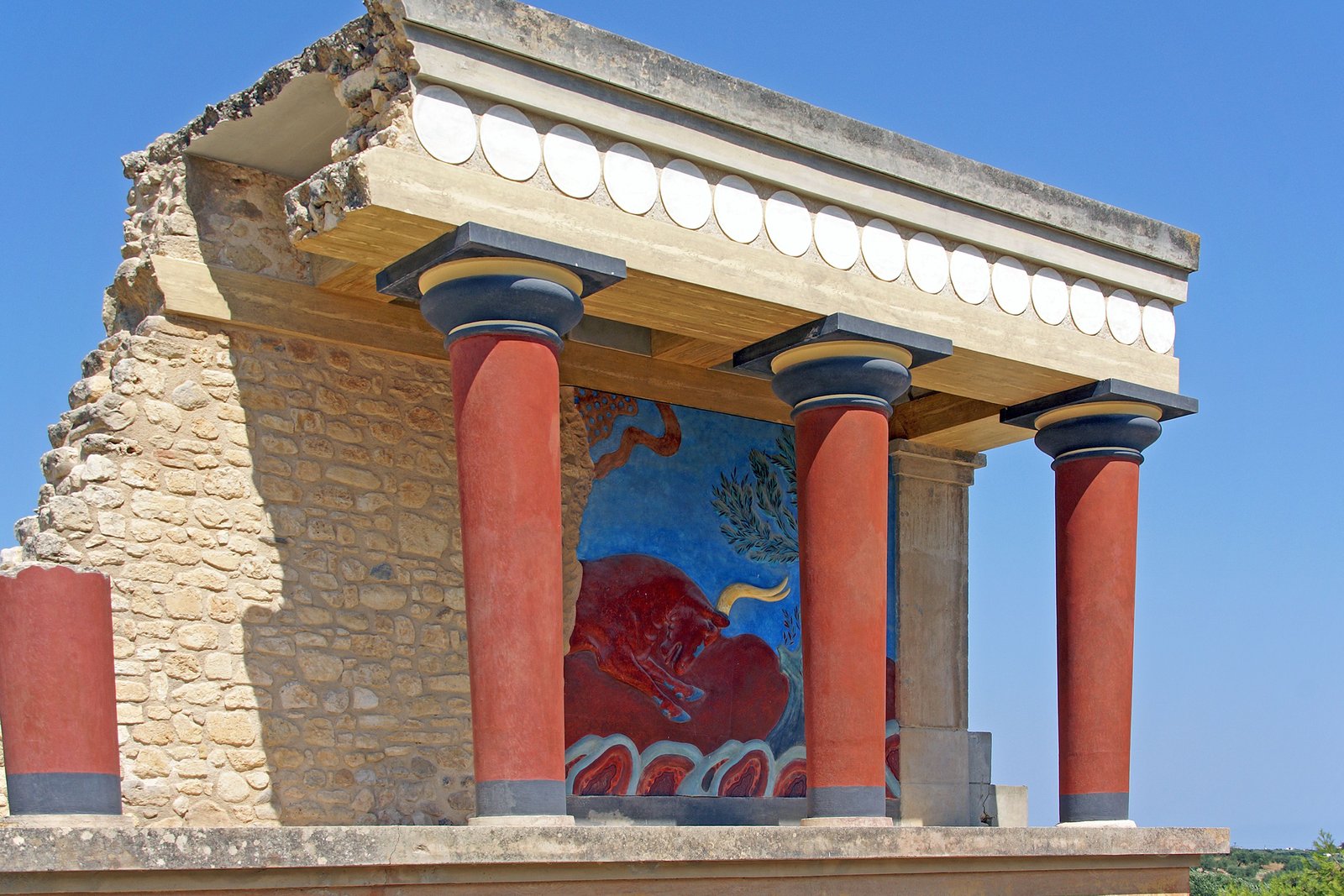
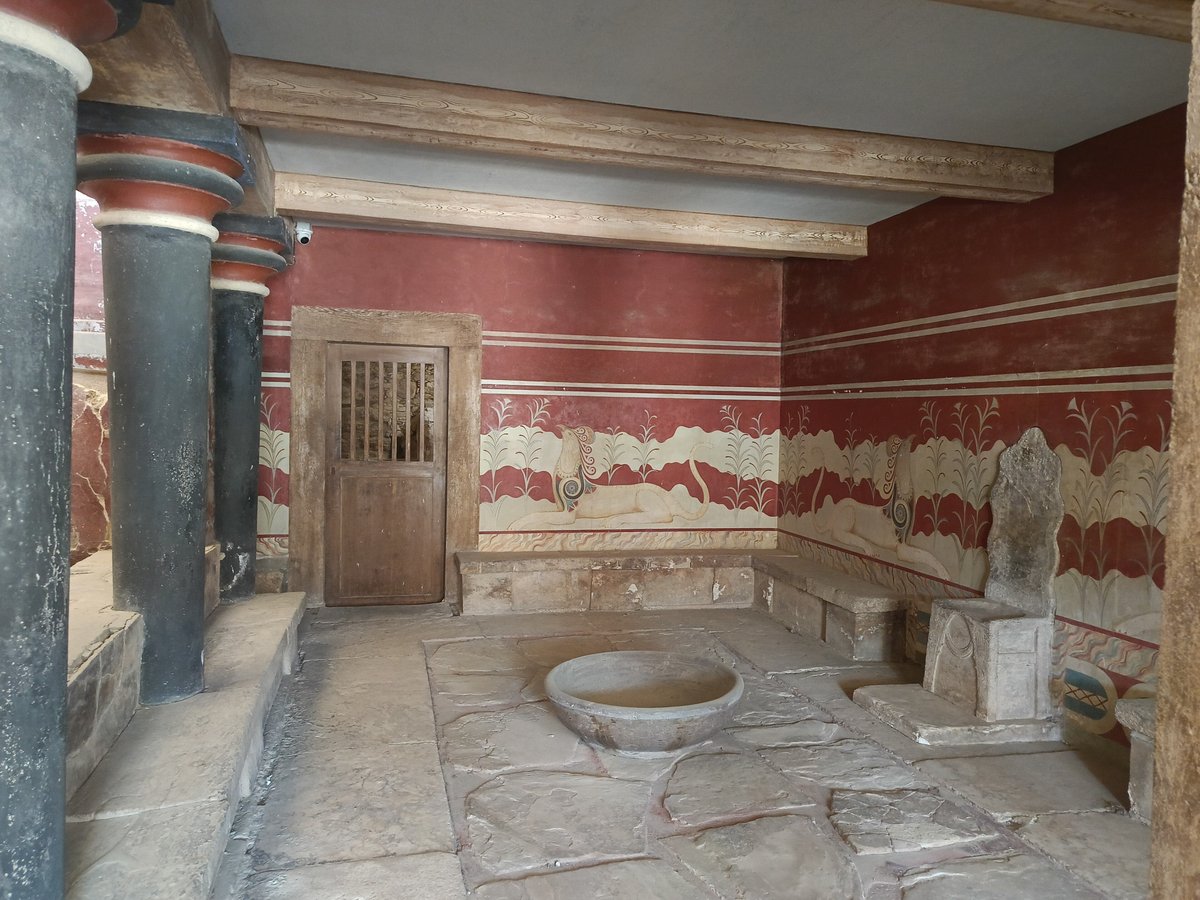
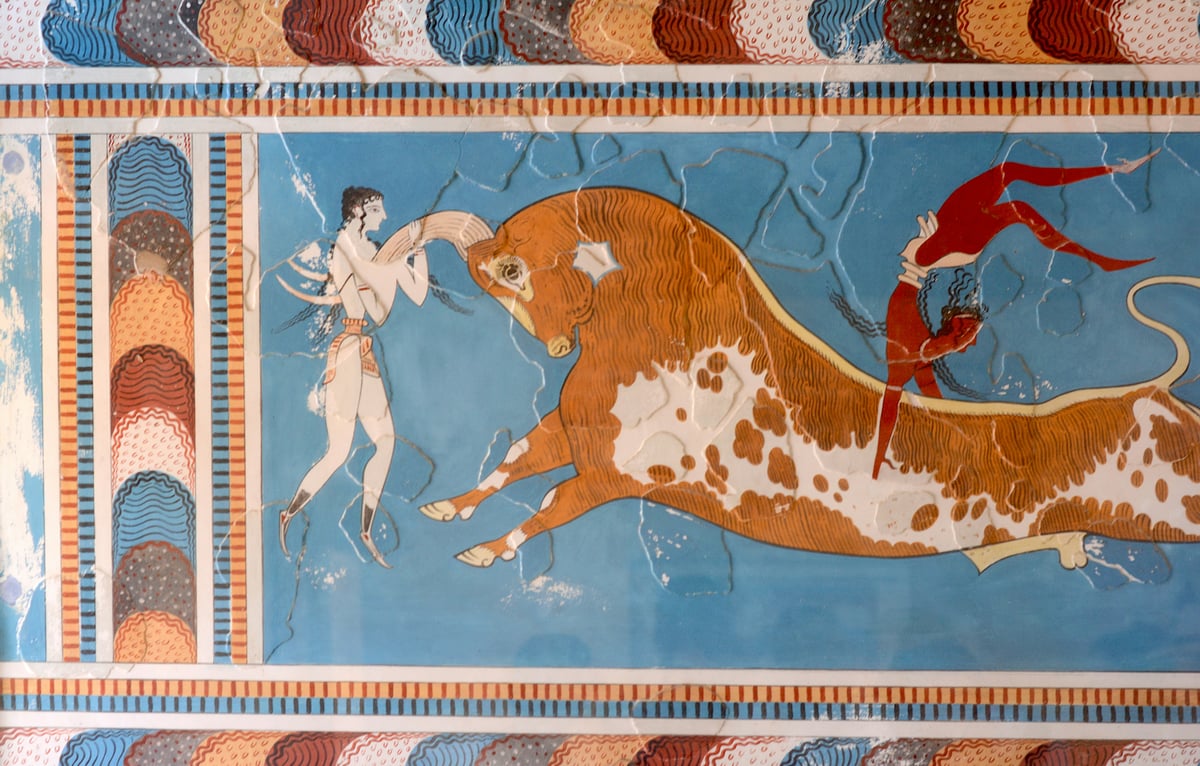
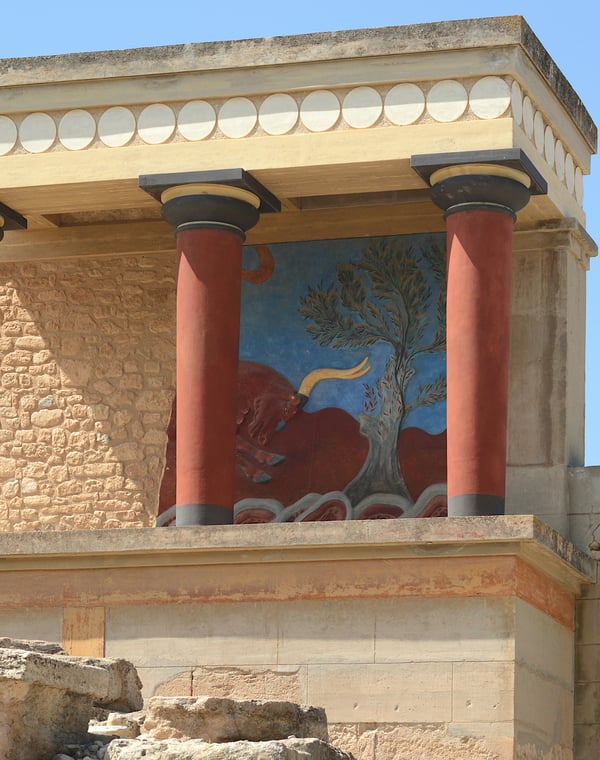
The site you walk today is partly reconstructed — the early-20th-century archaeologist Sir Arthur Evans rebuilt sections with concrete and repainted frescoes to show how it might have looked. The result is controversial among scholars but undeniably helps visitors visualize the place. Highlights include the Throne Room with its alabaster throne, the grand staircase, the distinctive downward-tapering red columns, and copies of famous frescoes like the bull-leaping and dolphin scenes (the originals are in the Heraklion museum).
Why context matters here
More than most ancient sites, Knossos rewards preparation. Without it, the reconstructed walls and concrete can be confusing. With a guide or a good audio guide, the storerooms, the drainage systems, the religious symbols, and the sheer sophistication of a 4,000-year-old society come alive. A guided tour is genuinely worth it here in a way it isn't everywhere — the stones don't explain themselves.
Pair it with the Heraklion museum
This is the key tip: visit Knossos together with the Heraklion Archaeological Museum, a short distance away in the city. The museum holds the original frescoes and artifacts from the site — the real bull-leaping fresco, the famous figurines, the Phaistos Disc. Seeing the originals in the museum and the architecture at the site, in either order, gives you the complete picture of Minoan civilization. Many travelers do both in a day.
Practical tips for visiting
A few things make the visit smoother. Knossos is just outside Heraklion, easily reached by car, taxi, or city bus. Go early or late to avoid the midday heat and the cruise-and-tour crowds, as the site is largely unshaded. Wear sun protection and good shoes, and bring water. Buying tickets ahead or joining a tour with priority entry saves time in peak season; a combination ticket with the Heraklion museum can be good value. Allow about two hours for the site, more with the museum.
Is Knossos worth it?
For anyone with even a passing interest in history, absolutely — it's one of the most important ancient sites in Europe and the heart of a civilization most visitors know little about until they arrive. The reconstruction divides opinion, but it helps the site come alive for non-specialists, and paired with the museum it's a genuine highlight of a Crete trip. Go with some context or a guide, beat the crowds, and you'll find it fascinating rather than baffling.
A quick guide to the Minoans
To get the most from Knossos, it helps to know who built it. The Minoans were a sophisticated Bronze Age civilization that flourished on Crete from roughly 2700 to 1450 BC — Europe's first advanced society, centuries before classical Greece. They were seafarers and traders who spread across the Aegean, built grand palaces, developed writing systems (the still-undeciphered Linear A), and produced vivid, naturalistic art full of dolphins, bulls, and elegant figures. Their culture seems to have declined after a combination of natural disaster — possibly linked to the massive volcanic eruption on Santorini — and Mycenaean arrival from the mainland. Knossos was their greatest center, which is why it and the Heraklion museum together are really the story of a lost civilization most visitors have never studied. Walking in with that frame turns the site from confusing ruins into the capital of Europe's first great culture.
FAQ
What is the Palace of Knossos?
It's the largest Bronze Age Minoan palace on Crete, the center of Europe's first advanced civilization some 4,000 years ago, and effectively Europe's oldest city. Its maze-like layout is linked to the myth of the labyrinth and the Minotaur.
Is Knossos worth visiting?
Yes — it's one of the most important archaeological sites in Europe. The partial reconstruction divides scholars but helps visitors visualize the palace, and paired with the Heraklion museum it's a highlight of any Crete trip.
Should I get a guide for Knossos?
It's well worth it here. More than most sites, Knossos benefits from a guide or audio guide to make sense of the reconstructed ruins and the sophisticated Minoan world — the stones don't explain themselves.
Should I visit the Heraklion museum too?
Definitely — it holds the original frescoes and artifacts from Knossos, including the real bull-leaping fresco and the Phaistos Disc. Seeing the site and the originals together gives the complete picture. Many do both in a day.
How do I avoid the crowds at Knossos?
Go early or late to dodge the midday heat and the cruise-and-tour crowds, since the site is largely unshaded. Buying tickets ahead or taking a priority-entry tour also saves time in peak season.
Keep planning
Not sure how the islands fit together?
Pick your trip length and we'll route a real island-by-island plan — ferries included.