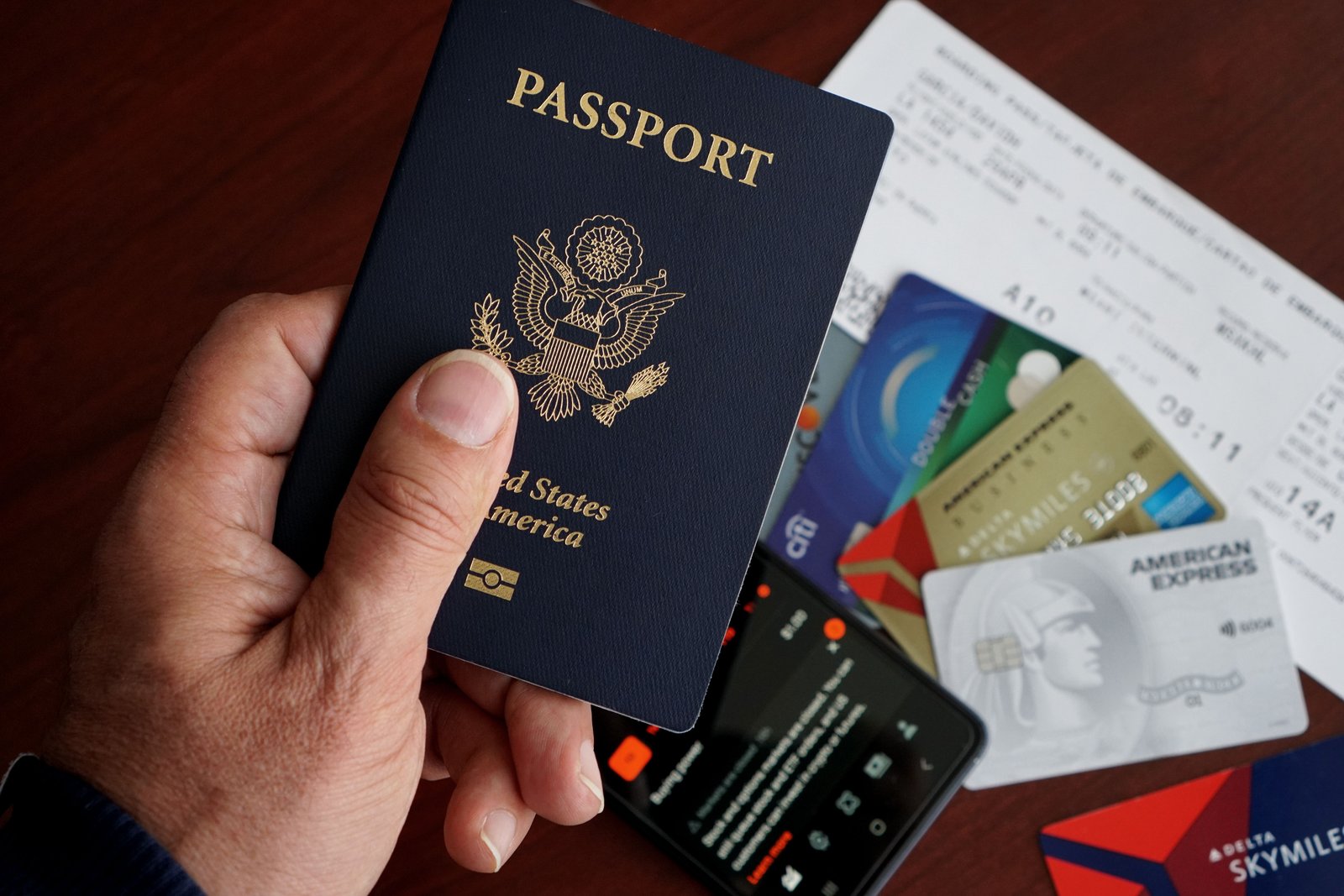
Entry Requirements for Greece: Passports and the Schengen Rules
Greece entry requirements for Americans: your passport checklist, the new EES biometric border process, ETIAS status, customs, and what to expect at arrival.
Knowing exactly what you need to enter Greece — and what to expect at the border — takes the stress out of arrival. For American travelers the requirements are straightforward, but a new EU biometric border system is now in effect and an online authorization is on the horizon, so it's worth having a clear checklist. This guide covers Greece's entry requirements for U.S. citizens: your documents, the border process, customs, and the changes to watch for — with a reminder to confirm the latest rules officially before you go.
This article contains affiliate links. If you book through them we earn a small commission at no extra cost to you.
Your entry checklist
For a standard tourist trip, here's what U.S. citizens need to enter Greece:
A valid passport (valid at least three months beyond your planned departure from the Schengen Area, and issued within the previous ten years). No visa, for stays up to 90 days within any 180-day period. It's also wise to be able to show, if asked, proof of onward or return travel and sufficient funds / accommodation details for your stay — border officials can request these, though they often don't for typical tourists. That's the core of it: passport, no visa, and basic trip proof in your back pocket.
Passport validity, in detail
The passport rule trips up more travelers than anything else, so to be precise: your passport must be valid for at least three months beyond the date you plan to leave the Schengen Area, and it must have been issued within the last ten years. Many experts suggest having six months' validity as a buffer. Check both dates — issue and expiry — well before you book, since passport renewals take time and this is the most common avoidable entry problem.
The EES biometric border process
The most significant recent change is the EU's Entry/Exit System (EES), now fully in effect, which replaces the old passport stamp. When you arrive, the automated system records your biometric data — facial image and fingerprints — plus your passport details and entry/exit dates. There's no fee, and you don't apply in advance; it happens at the border. On your first entry it may take a little longer as your data is registered, so allow patience at passport control. Your U.S. passport has been biometric since 2007, so it's compatible.
ETIAS: not required yet
You may have read about ETIAS, an upcoming online travel authorization (like the U.S. ESTA). As of now it is not yet in effect — no action is required from travelers at this point. It's expected to launch in late 2026, after which visa-free travelers will apply online and pay a fee of 20 before traveling (free for under-18s and over-70s; the fee is set but the system is not yet live). When it arrives, use only the official EU (europa.eu) website to apply, and ignore the unofficial sites that charge inflated fees. Until then, you don't need it to enter Greece.
At the border: what to expect
Arrival is usually quick and routine. You'll proceed to passport control, complete the EES biometric process, and possibly answer a brief question or two about the purpose and length of your stay. Have your passport ready and, ideally, know your hotel address and return travel details in case you're asked. Most American tourists pass through with minimal fuss. After passport control, you collect any checked luggage and pass through customs.
Customs and what you can bring
Greece follows standard EU customs rules. For personal use, you can bring normal amounts of clothing, electronics, and belongings without issue. There are duty-free limits on things like alcohol, tobacco, and high-value goods brought from outside the EU, and you must declare large sums of cash (the EU threshold is €10,000 or equivalent) when entering or leaving the EU. Restrictions apply to items like certain foods, plants, and of course anything illegal. For a normal vacation, customs is a non-event — just don't bring prohibited items or undeclared large cash sums.
Health and other requirements
For entry itself, no special vaccinations are required for U.S. travelers to Greece under normal circumstances. It's wise (though not an entry requirement) to have travel insurance with medical coverage, since your U.S. health insurance may not cover you abroad. Requirements can change in response to health situations, so this is another reason to check official sources close to your travel date.
Verify before you travel
Because entry rules are evolving — EES rolling out, ETIAS coming, details subject to change — treat this as a guide and confirm the current requirements officially before your trip. The U.S. State Department travel pages and the official EU travel site (europa.eu) are the authoritative sources. A quick check close to departure ensures you're working from the latest rules, not outdated information.
The bottom line
Entering Greece as an American is simple: bring a valid passport (three-plus months beyond departure, under ten years old), no visa needed for up to 90 days, complete the new EES biometric process at the border, and know that ETIAS isn't required yet. Keep some basic trip proof handy, follow standard EU customs rules, and verify the latest requirements officially before you fly. Do that, and your arrival in Greece will be the easy first step of a great trip.
FAQ
What do Americans need to enter Greece?
A valid passport (at least three months beyond your departure from the Schengen Area, issued within ten years), with no visa needed for stays up to 90 days within any 180-day period. Have proof of onward travel and accommodation handy in case you're asked.
Is there a biometric border system in Greece now?
Yes — the EU's Entry/Exit System (EES) is now fully in effect, recording your facial image, fingerprints, and passport details on entry instead of stamping your passport. There's no fee and no advance application; it happens at the border.
Do I need ETIAS to enter Greece?
Not yet — ETIAS is expected to launch in late 2026 and isn't required at this point. When it arrives, apply only through the official EU (europa.eu) site. Until then, no action is needed.
How much cash can I bring into Greece?
You can carry cash freely, but must declare sums of €10,000 or more (or equivalent) when entering or leaving the EU. Standard EU duty-free limits apply to alcohol, tobacco, and high-value goods from outside the EU.
Do I need vaccinations or travel insurance for Greece?
No special vaccinations are required for U.S. travelers under normal circumstances. Travel insurance with medical coverage isn't an entry requirement but is wise, since U.S. health insurance may not cover you abroad. Verify current rules before traveling.
Keep planning
Not sure how the islands fit together?
Pick your trip length and we'll route a real island-by-island plan — ferries included.