How to eat at a Greek taverna like a local: when to go, how to order to share, the bread charge, why the check won't come until you ask, and how much to tip.
The taverna is the heart of Greek dining — a casual, family-run restaurant serving traditional food in an unhurried, convivial atmosphere. For first-timers, though, the taverna comes with unwritten rules that can be confusing: when to eat, how to order, whether to tip, why the waiter isn't bringing your check. Knowing how it works turns a good meal into a great, authentic experience. This guide explains how to eat at a Greek taverna like you belong there.
This article contains affiliate links. If you book through them we earn a small commission at no extra cost to you.
What a taverna is
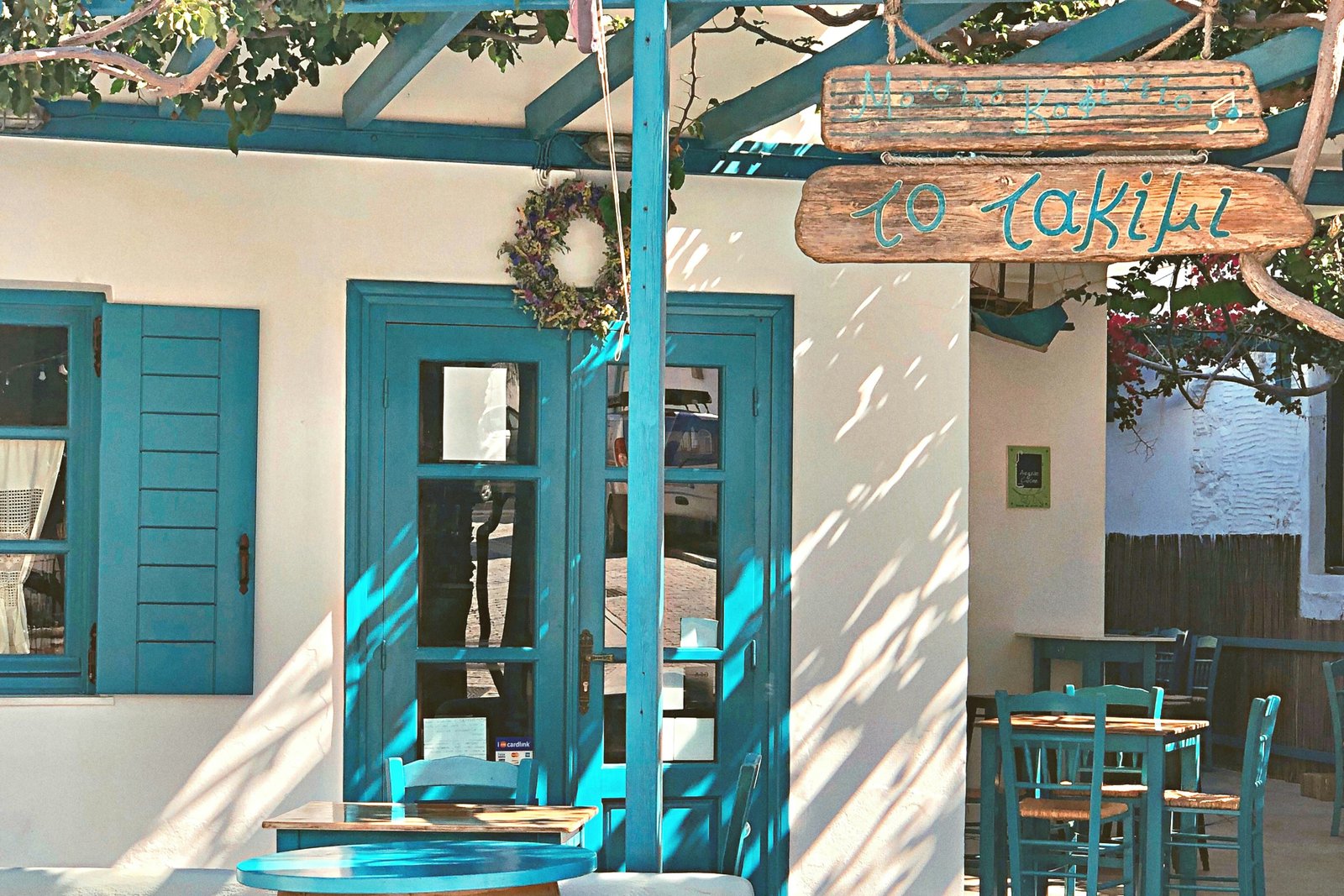
A taverna is a traditional, casual Greek eatery — typically family-run, reasonably priced, and focused on home-style cooking rather than fine dining. It's distinct from an estiatorio (a more formal restaurant), a mezedopolio (specializing in small plates), an ouzeri (small plates with ouzo), and a psarotaverna (seafood taverna). For authentic, everyday Greek food, the taverna is where you want to be.
When to eat
Greeks eat late. Lunch runs from around 2pm, and dinner often doesn't start until 9pm or later — turn up at 7pm and you may have the place to yourself. Don't worry about rigid mealtimes; many tavernas serve continuously, and the relaxed pace means a meal can stretch for hours. If you want the lively local atmosphere, go late.
How to order
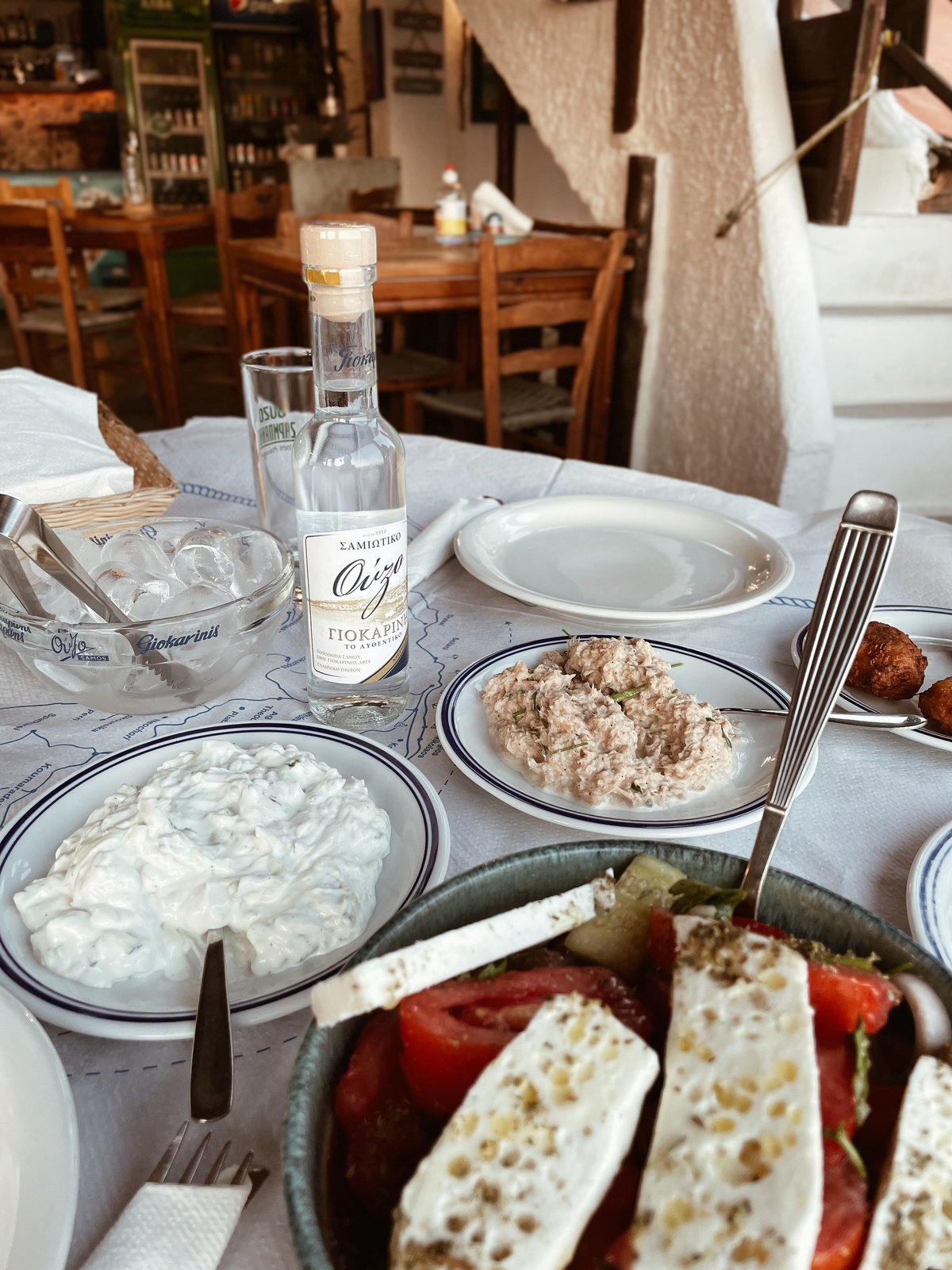
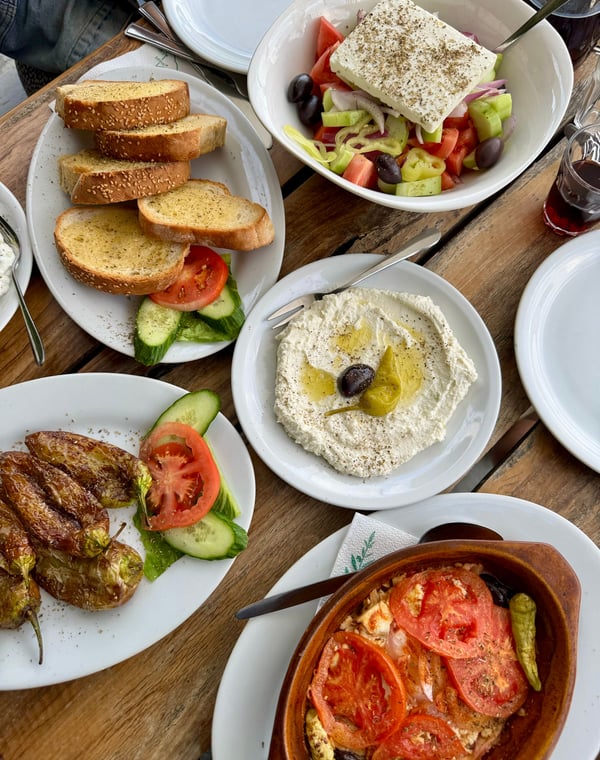
Order for the table, not the individual. The Greek way is a shared spread: a few mezedes (small plates), a salad, some bread, and a few mains, all placed in the middle to share. Start with a handful of dishes and order more if you're still hungry — there's no rush. Ask about the day's specials or the ready-cooked magirefta (home-style dishes kept warm), which are often the best and most authentic things on offer and not always written down.
The bread and the extras
Bread usually arrives automatically and appears as a small cover charge on the bill — this is normal and inexpensive, not a scam. At the end of the meal, many tavernas bring a free dessert or fruit and a shot of spirit (raki or ouzo) as a gesture of hospitality. It's a lovely tradition; accept it graciously.
Getting the check
Here's the one that trips up Americans: the waiter won't bring your check until you ask. In Greek culture, rushing you out with the bill would be rude — the table is yours for as long as you want it. When you're ready, catch the server's eye and ask for the bill (to logariasmo, parakaló). Don't sit waiting politely; it won't come on its own.
Tipping at a taverna
Tipping in Greece is modest and not obligatory the way it is in the U.S. Service is generally included in the prices, and there's no expectation of an American-style 18–20%. It's customary to round up or leave around 5–10% for good service — a few euros on a typical meal. Leave it in cash on the table even if you pay the bill by card. This is a real, pleasant difference for American travelers: you don't need to tip heavily.
Taverna etiquette and tips
A few more things that help. Eating a few streets back from the tourist hotspots means better food and prices and a more local crowd. Be wary of places with photo menus and hosts who wave you in — usually a tourist-trap sign. Dress is casual; tavernas are relaxed. House wine in a carafe is cheap and usually good. And lean into the unhurried pace — the long, social meal is the whole point, not an inconvenience.
The bottom line
Eating at a taverna is one of the simple joys of Greece: great food, low prices, warm hospitality, and zero pressure. Go late, order to share, ask for the specials, don't wait for the check to appear, and tip modestly. Do that, and you'll eat well, feel at home, and experience the side of Greek culture that happens around the table.
Useful Greek words at the table
A few words go a long way and are always appreciated, even though most tavernas have English menus or staff. "Yassas" (hello/formal) and "efharistó" (thank you) cover the basics. "Neró" is water, "krasí" is wine, and "chyma" is the house wine by the carafe. When you're ready to settle up, "to logariasmó, parakaló" means "the bill, please." If something's delicious, "polí oréa" (very nice) will make the cook's day. And the toast before drinking is "yamas!" (cheers). You don't need fluency — Greeks are warm and forgiving with visitors who try — but a handful of words turns a transaction into a friendly exchange, and the hospitality you get back is often even warmer for it. Don't worry about getting it perfect; the effort is what counts.
FAQ
What is a Greek taverna?
A traditional, casual, usually family-run restaurant serving home-style Greek food at reasonable prices in a relaxed atmosphere. It's the place to go for authentic everyday Greek cooking.
What time do Greeks eat dinner?
Late — dinner often starts around 9pm or later. Arrive at 7pm and the taverna may be empty; go later for the lively local atmosphere. Many tavernas serve continuously through the afternoon and evening.
Do I tip at a Greek taverna?
Tipping is modest and not obligatory — there's no American-style 18–20% expectation. Rounding up or leaving around 5–10% in cash for good service is customary and appreciated.
Why won't the waiter bring my check?
In Greek culture it's considered rude to rush you out, so the check won't come until you ask for it. Catch the server's eye and request the bill when you're ready — it won't arrive on its own.
Is the bread charge on my bill a scam?
No — bread typically comes automatically and appears as a small, inexpensive cover charge. It's standard practice at Greek tavernas, not a tourist trap.
Keep planning
Not sure how the islands fit together?
Pick your trip length and we'll route a real island-by-island plan — ferries included.