The hop between Santorini and Mykonos is one of the most popular ferry routes in Greece — the link between the two most famous islands, and a near-essential leg for anyone combining the icons on one trip. It's a straightforward journey, but there are a few things worth knowing about timing, ferry types, and booking to make it smooth. This guide covers everything about the Santorini to Mykonos ferry: how long it takes, what to expect, and how to do it right.
This article contains affiliate links. If you book through them we earn a small commission at no extra cost to you.
The route at a glance
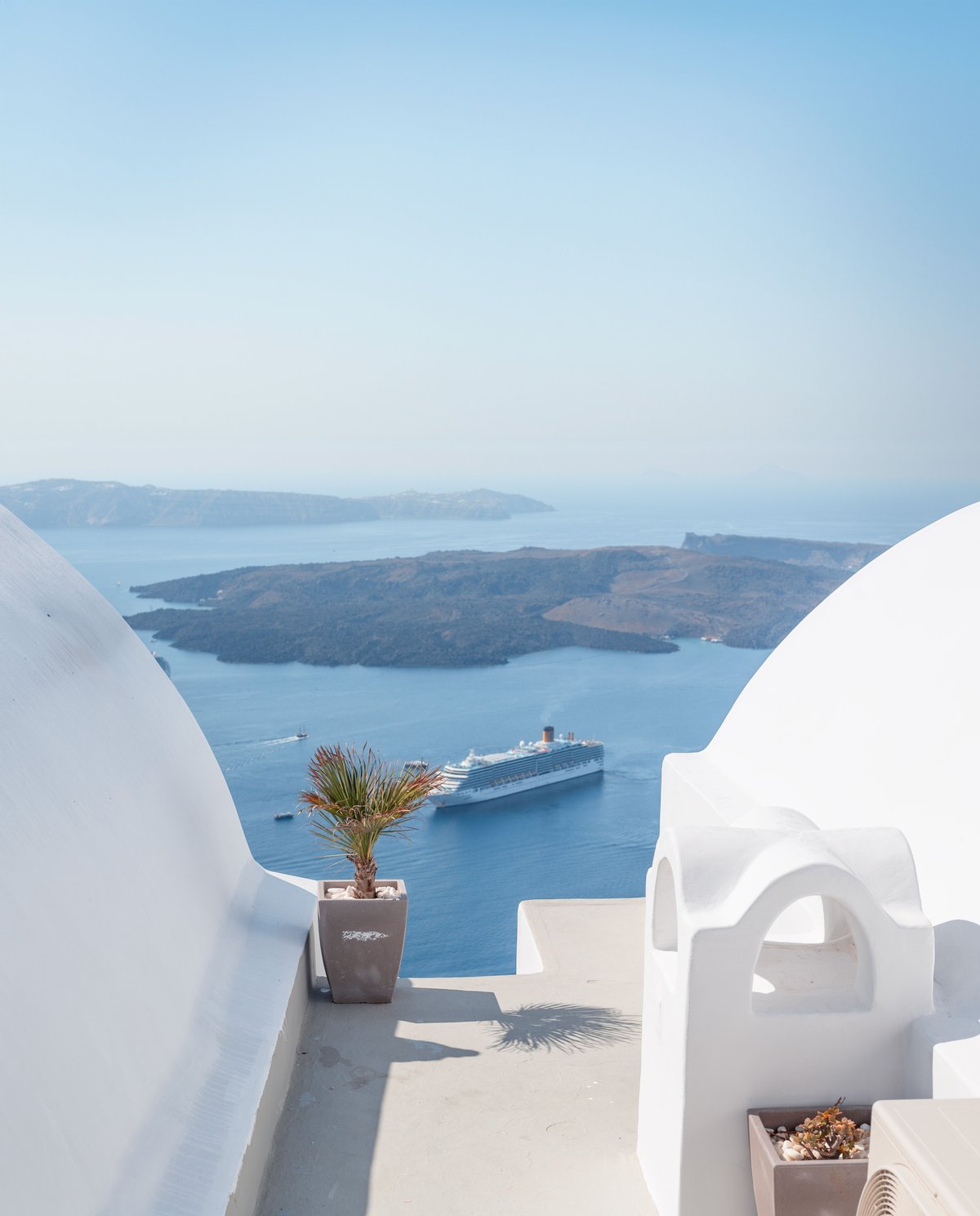
Santorini and Mykonos sit in the same island group (the Cyclades), so the connection is well-served, especially in the summer season. The journey is typically by high-speed ferry and takes roughly 2 to 3 hours depending on the boat and whether it stops at islands like Naxos, Paros, or Ios along the way. It's a popular, frequent route in peak season, with fewer sailings in the shoulder and winter months.
How long does it take?
Most high-speed ferries make the trip in around 2 to 3 hours. Direct sailings are quicker; those stopping at intermediate islands take longer. Crossing times vary by operator and boat, and the schedule changes by season, so always check the current timetable for your travel dates rather than assuming a fixed duration. There's no conventional (slow) ferry advantage on this particular route the way there is on some — high-speed is the norm.
Which direction, and where it fits
The route runs both ways, equally well-served. Where it fits in your trip depends on your sequence: many first-timers do Mykonos first, then Santorini last (saving the caldera and sunset for the grand finale), while others reverse it. Since Santorini is usually the island people want to end on — and it has an airport for the flight back to Athens — the Mykonos-to-Santorini direction is slightly more common, but both work. Plan the order around which island you want as your finale.
Ferry types and classes
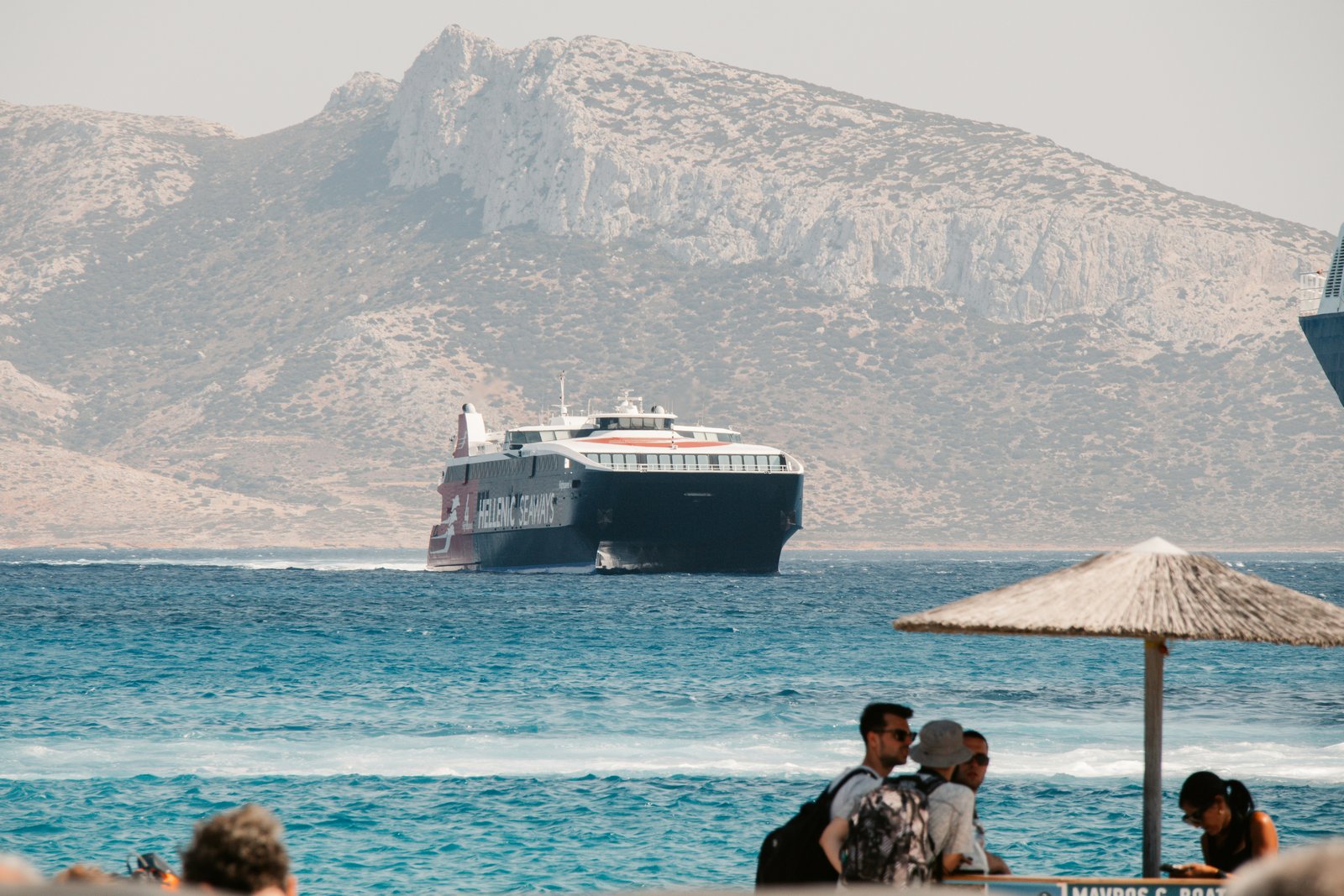
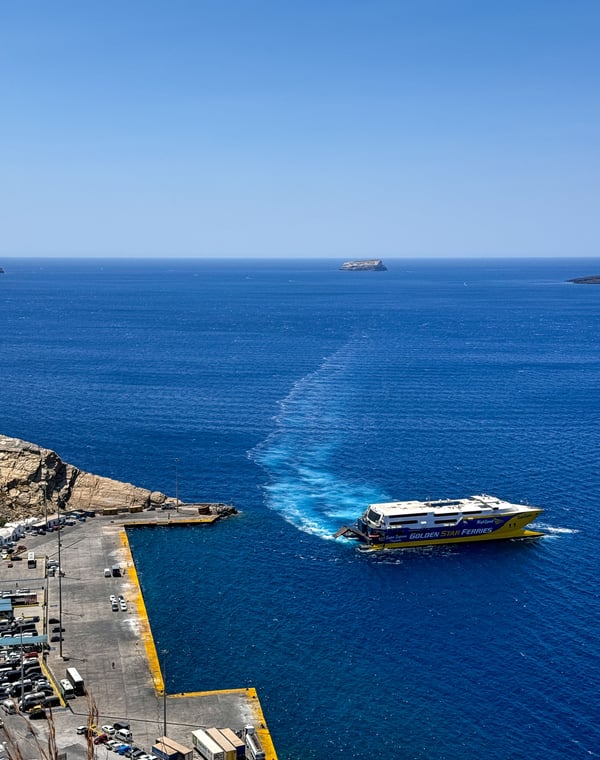
On the high-speed boats serving this route, you'll usually choose between standard economy seating and pricier numbered or business-class seats. For a 2-to-3-hour trip, economy is perfectly comfortable for most travelers. The high-speed catamarans are enclosed (less open-deck time than the big conventional ferries on other routes), so if you're prone to seasickness, a numbered seat and some preparation help, since the fast boats can feel choppy in wind.
Booking your tickets
This is a busy route, so book ahead in peak season (July–August) — popular sailings sell out, and you don't want to be stuck without a crossing on a tight itinerary. In shoulder season you have more flexibility, but schedules thin out, so still check times. Book through a ferry search-and-booking platform to compare operators, times, and prices for your dates. Because fares vary by operator, season, and how far ahead you book, check current prices rather than relying on a fixed figure.
The meltemi wind factor
One important Cyclades-specific note: the summer meltemi wind can affect this route. The high-speed catamarans are more likely to be delayed or canceled in strong winds than the big conventional ferries, and the crossing can be bumpy. Build a buffer into your plans — never schedule this hop on the same day as your flight home, and if the wind is up, have a flexible mindset. This is a real consideration on any fast-ferry leg in the Cyclades.
Practical tips for the crossing
A few things make it smoother: arrive at the port early, as Santorini's port (Athinios) is a steep drive below the caldera towns and boarding can be busy; pre-book a transfer to the port rather than relying on grabbing one last-minute; keep your luggage manageable for the boarding scramble; and have your ticket ready (mobile or printed, per the operator). If you're prone to motion sickness, take something beforehand and pick a seat toward the middle of the boat.
The bottom line
The Santorini–Mykonos ferry is an easy, well-served hop that makes combining the two icons straightforward — around 2 to 3 hours on a high-speed boat, frequent in summer, and simple to book ahead. Mind the meltemi wind, leave a buffer before any flights, and decide your direction based on which island you want as your finale. Do that, and connecting Greece's two most famous islands is a smooth part of a great trip.
FAQ
How long is the ferry from Santorini to Mykonos?
Roughly 2 to 3 hours by high-speed ferry, depending on the boat and whether it stops at intermediate islands like Naxos or Paros. Always check the current timetable for your dates, as schedules vary by season.
Is there a direct ferry between Santorini and Mykonos?
Yes — direct high-speed sailings run the route, especially in summer, and are quicker than those stopping at other islands. Frequency drops in the shoulder and winter seasons.
Should I do Mykonos or Santorini first?
Both work, but many first-timers save Santorini for last as the grand finale, since it has the famous sunset and an airport for the flight back to Athens. Plan the order around which island you want as your finale.
Do I need to book the Santorini–Mykonos ferry in advance?
In peak season (July–August), yes — popular sailings sell out. In shoulder season you have more flexibility, but schedules thin out, so still check times and book ahead to be safe.
Can the ferry be canceled by wind?
Yes — the summer meltemi wind can delay or cancel the high-speed catamarans more than the big conventional ferries. Build a buffer into your plans and never schedule this hop on your flight-home day.